 About
About Job Board
 Blog
Blog Contact
 Shop
Shop
 Payments
 Membership
 Accreditation
 Professional Learning Services
 Advisory & Consultative Services
 Resources
In Christian elementary schools, we aim for more than academic excellence—we seek to shape hearts, habits, and character. We want classrooms marked by peace, respect, responsibility, and grace. Yet one of the most overlooked foundations for building that kind of environment is strong, explicit classroom management and behavior strategy training—especially for novice teachers.
Too often, new teachers enter Christian schools with passion, calling, and content knowledge—but without practical classroom systems. The result is discouragement, inconsistency, and lost instructional time that impacts both students and teachers.
Classroom management is not opposed to grace-filled education—it is what makes it possible.
Classroom Management Is Ministry Infrastructure
In a faith-based school setting, behavior systems are sometimes misunderstood as being too rigid or too secular. But in reality, healthy classroom management provides the structure that allows discipleship and instruction to flourish.
Clear routines, expectations, and behavior responses create:
- Emotional safety
- Predictable environments
- Respectful interactions
- More time for instruction and relationship
- Reduced anxiety for students
Structure and grace are not opposites. Structure supports grace. When expectations are clear, correction can be calm. When routines are consistent, teachers can respond with patience instead of frustration.
A well-managed classroom gives teachers more margin to model Christlike character—gentleness, fairness, forgiveness, and wisdom—instead of constantly reacting to disruption.
The Training Gap in Teacher Preparation Programs
Many novice teachers—including those graduating from strong teacher-prep programs—report the same experience: they learned theory, lesson planning, and assessment design, but received minimal hands-on training in classroom management.
Common gaps include:
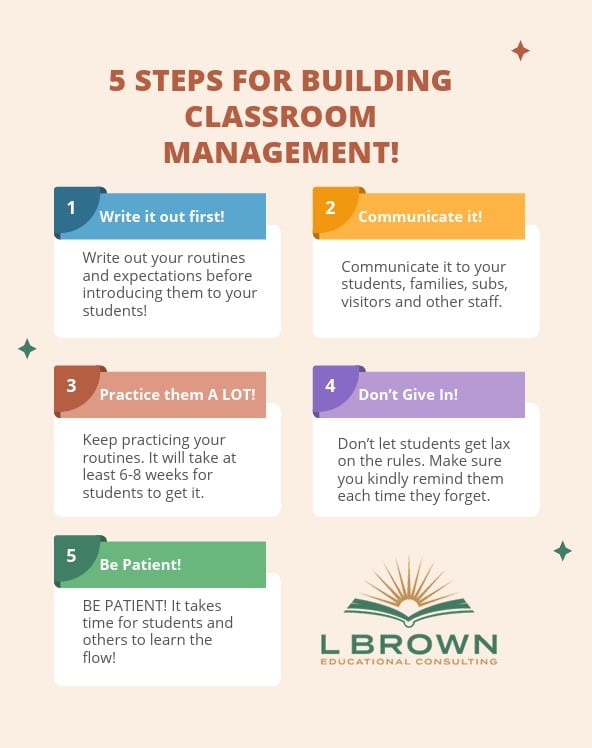
- How to establish procedures the first week of school
- How to respond to repeated low-level disruptions
- How to build behavior systems that are preventative, not reactive
- How to correct behavior without escalating conflict
- How to manage transitions and momentum
- How to align consequences with restoration and responsibility
Student teaching placements sometimes model strong management—but just as often, they do not. And even when they do, observation is not the same as explicit instruction and guided practice.
New teachers are often told: “You’ll find your style.”
But style is not a system—and classrooms need systems.
Why Strategies Matter Even More in Christian Schools
Christian schools frequently hire teachers who are deeply committed to their faith and mission—including career changers and alternatively certified educators. These teachers bring tremendous value, but they may have had even less formal management training.
Additionally, Christian schools often emphasize relationship-based discipline, restorative approaches, and character formation—all of which are powerful. But without practical frameworks, teachers may struggle to translate philosophy into daily action.
Without tools, even the most caring teacher can become inconsistent. Without systems, even the most patient teacher can burn out.
Good intentions are not enough to sustain classroom order.
Behavior Strategy Is a Skill—Not a Personality Trait
One harmful myth in education is that “good classroom managers are just naturally gifted.” This is not true. Effective classroom leadership is built from learnable skills:
- Clear expectations
- Explicit modeling
- Repetition and practice
- Consistent follow-through
- Calm correction language
- Efficient routines
- Preventative planning
These are teachable. Coachable. Repeatable.
When Christian schools invest in management training and coaching, they are not “importing secular methods”—they are equipping teachers with stewardship tools. Time, attention, and student growth are all forms of stewardship.
Supporting Teachers Protects Teacher Calling
Teacher attrition is can be especially painful in Christian education communities. When teachers leave, students lose mentors and schools lose culture carriers. One of the leading causes of early teacher burnout is classroom management struggle.
New teachers rarely leave because they don’t love teaching.
They leave because they feel ineffective and overwhelmed.
When schools proactively train and coach classroom management, they:
- Increase teacher confidence
- Shorten the struggle curve
- Improve student outcomes
- Strengthen school culture
- Protect teacher calling
The Path Forward
Christian elementary schools can take practical steps:
- Provide explicit classroom management training for new hires
- Offer coaching and observation cycles focused on behavior systems
- Create schoolwide behavior frameworks for consistency
- Model correction language aligned with biblical character values
- Normalize asking for help with classroom leadership
Most importantly, schools can remove the stigma around management struggles. Needing tools is not failure—it is professionalism.
Final Thought
A peaceful, focused classroom is not created by chance—it is built through intentional systems and supported teachers. When Christian schools equip educators with strong classroom management and behavior strategies, they create space for both academic excellence and Christ-centered formation.
Strong classrooms don’t limit grace—they make room for it.
L Brown Educational Consulting focuses on Classroom Management coaching and mentoring for new K–5 teachers. If you’d like more information on the services offered, please reach out to Liz Brown at LBrownEduConsulting@gmail.com.