
 About
About Job Board
 Blog
Blog Contact
 Shop
Shop
 Payments
 Membership
 Accreditation
 Professional Learning Services
 Advisory & Consultative Services
 Resources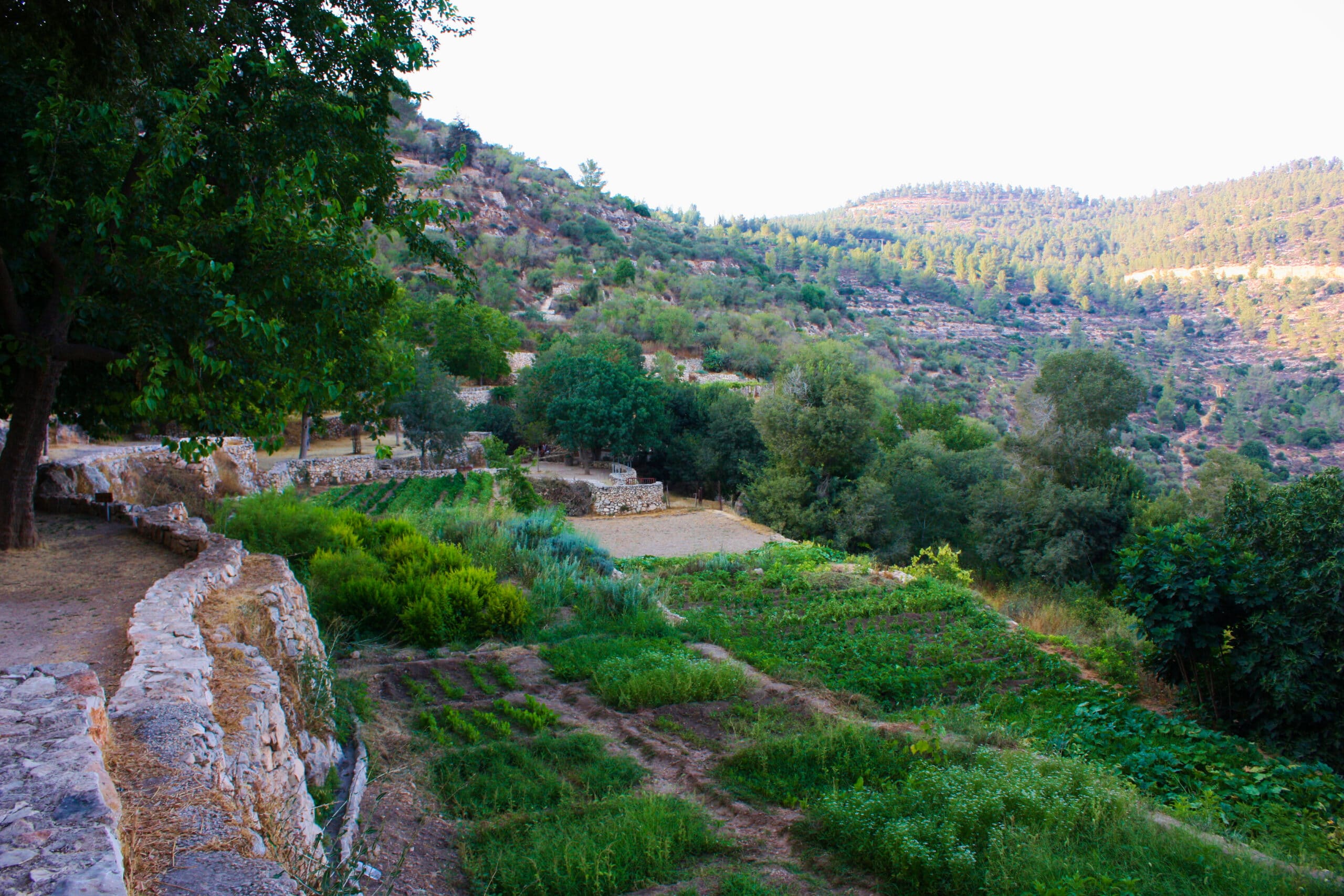
Imagine an ancient garden on a terraced hillside where stones hold precious soil in place. A fig tree, olive tree, wheat, and grapevines grow just enough to sustain a family. Such gardens required patience, care, and hope—quiet reminders that life flourishes where the soil is tended well.
In the ancient world, gardens like this were not merely decorative spaces. They were places of life and survival. Families depended on them for food, oil, wine, and shade. Every inch of soil mattered. Farmers worked patiently to clear stones, build terraces, and ensure that rainwater remained where it was needed most. Without careful attention, the soil could quickly erode, leaving the hillside barren.
Yet when the ground was tended well, something remarkable happened. Seeds took root. Plants flourished. What once appeared to be hard and rocky land became a place of nourishment and beauty.
Gardens Throughout the Story of Scripture
This image of the garden appears again and again throughout the pages of the Bible. In fact, Scripture begins and ends with gardens.
In the opening chapters of Genesis, God plants a garden in Eden. The garden is full of life and abundance—trees that are pleasing to the eye and good for food, rivers that water the land, and animals that fill the air and ground. At the center of it all stands humanity, created in God’s image and invited to live within the beauty of creation.
But what makes the garden of Eden truly extraordinary is not simply its abundance. It is the presence of God. Scripture tells us that God walked in the garden with Adam and Eve. The garden becomes the setting for relationship, a place where humanity encounters the Creator face to face.
From the very beginning of the biblical story, the garden represents more than plants and soil. It represents communion with God.
Garden imagery continues to appear throughout the rest of Scripture. The prophets speak of deserts becoming gardens and barren lands blooming again. The psalms describe the righteous as trees planted by streams of water, bearing fruit in their season. The wisdom literature reminds readers that life rooted in God’s ways produces flourishing and stability.
The garden becomes a picture of life as God intends it—ordered, fruitful, and sustained by his presence.
From Creation to Resurrection: A Garden Restored
Remarkably, the story of Scripture also brings us back to a garden.
After the crucifixion of Jesus, the Gospel of John tells us that the tomb where Jesus was laid was in a garden. Early on the first day of the week, Mary Magdalene goes there to mourn. She is grieving and confused, believing that the one she loved and followed is gone forever.
As she stands outside the tomb weeping, she encounters someone she does not immediately recognize. Through her tears, she assumes the man speaking to her must be the gardener.
Only moments later does she realize that it is Jesus himself—alive, risen from the dead.
There is something deeply poetic about this moment. Standing in a garden, Mary mistakes the risen Christ for a gardener. In many ways, the image is fitting. Through Jesus’ resurrection, what was broken in Eden is now being renewed.
The story of the Bible moves from garden to garden—from creation to resurrection, from loss to restoration.
God, the Giver of Growth
The garden imagery also helps us understand something important about who God is.
Throughout Scripture, God is described as the one who makes things grow. He sends rain for the crops and sunshine for the harvest. He brings forth plants from the soil and fruit from the trees. Farmers may plant seeds and water fields, but the miracle of growth ultimately belongs to God.
The apostle Paul later captures this truth when he writes, “I planted the seed, Apollos watered it, but God has been making it grow” (1 Corinthians 3:6).
This metaphor extends beautifully to the life of faith.
The Word of God as Seed
Jesus often described God’s Word as a seed. In his parable of the sower, a farmer scatters seeds across the land. Some fall on rocky ground, others among thorns, and some on hardened paths. But when seeds fall on good soil, they take root and produce an abundant harvest.
The image reminds us that the Word of God has the power to grow within the human heart. When Scripture is planted in our lives, it slowly shapes us. It changes the way we see the world, the way we treat others, and the way we understand God.
Faith grows much like a garden grows—slowly, patiently, and often quietly.
Our Calling: Tilling the Soil Together
But Scripture also reminds us that God invites us to participate in this process.
In Genesis, humanity is given the responsibility to work and care for the garden. The Hebrew words used in this passage describe both cultivation and protection. Humanity is invited to partner with God in tending the earth.
This calling reflects a beautiful truth: while God is the ultimate gardener, he invites us to work alongside him.
We become tillers of the soil.
Tilling the soil means preparing the ground so that seeds can grow. It involves:
- Loosening hardened earth so roots can take hold
- Removing stones that might block growth
- Pulling weeds that compete for nutrients
Tilling is quiet work. It is patient work. Often it happens long before any visible growth appears.
Yet without this work, gardens cannot flourish.
Educators as Gardeners of Faith
This metaphor speaks powerfully to the work of educators.
Teachers, pastors, and mentors often serve as tillers of the soil. Day after day they prepare the environment where learning can take root. They create classrooms where questions are welcomed, curiosity is encouraged, and wisdom is pursued.
Sometimes the work feels slow. Seeds planted in a classroom today may not bear visible fruit for years. A lesson that seems ordinary in the moment may later become a defining insight in a learner’s life.
Educators know that learning rarely happens instantly. It unfolds over time.
The same is true for faith.
When students encounter the story of Scripture, they begin a journey that unfolds across a lifetime.
They:
- Learn the great narratives of creation, fall, redemption, and restoration
- Discover the character of God and the teachings of Jesus
- Explore the historical, cultural, and geographical context of the Bible
- Begin to see Scripture as a unified story revealing God’s love
Each moment in the classroom becomes a small act of cultivation:
- A question asked.
- A story told.
- A passage read together.
- A discussion that helps learners see the beauty and wisdom within Scripture.
Over time, these small acts become seeds planted in the soil of the heart.
As we teach the Bible, this work carries an even deeper significance. Opening the pages of Scripture invites learners into the grand story of God’s work in the world. Students begin to see how the lives of Abraham, Moses, David, the prophets, and the apostles connect to the life and mission of Jesus.
They begin to recognize that the Bible is not simply a collection of ancient writings, but a unified story revealing God’s love for humanity.
Through careful teaching, students also learn to understand the context of the Bible—the historical settings, cultural backgrounds, and geographical landscapes that shape the text. These insights allow learners to read Scripture more clearly and appreciate its richness more deeply.
Trusting God’s Quiet Work of Growth
When educators guide learners through these discoveries, they help cultivate a deeper love for God’s Word.
And as learners grow in their understanding, something remarkable begins to happen. They start to see their own lives within the larger story of God’s redemption. The Bible becomes not only a book they study, but a story they live.
This is the quiet beauty of the gardener’s work.
Seeds planted faithfully begin to grow.
The prophet Isaiah once described those who trust in God as being like a well-watered garden—one whose springs never fail. The image suggests renewal and abundance. Even when the work of cultivating others requires great effort, God continues to supply the living water that sustains the gardener.
From One Classroom to God’s Larger Garden
Educators who devote themselves to nurturing faith and wisdom often become places where others encounter the presence of God. A classroom becomes more than a room with desks and books. It becomes a garden where truth takes root.
Students arrive each day carrying their questions, their curiosity, and sometimes their doubts. Within the classroom they encounter stories that have shaped generations. They hear about God’s faithfulness, his justice, his mercy, and his love.
And slowly, quietly, the seeds begin to grow.
Years later, those seeds may bear fruit in ways that no teacher could fully imagine. A student who once listened quietly may become a leader who shares God’s Word with others. A learner who struggled to understand may grow into someone who teaches and encourages others.
The work of cultivating hearts and minds extends far beyond the walls of a single classroom.
It becomes part of a much larger garden—the garden God is tending across the world.
A Word of Encouragement
As spring approaches each year, the imagery of the garden becomes especially meaningful. After months of cold and stillness, the earth begins to awaken again. Small green shoots push through the soil. Trees bud with new leaves. Fields once brown and dormant begin to show signs of life.
Spring reminds us that growth is always possible.
Seeds planted long ago may suddenly begin to flourish. What once seemed dormant may simply have been preparing beneath the surface.
For educators and spiritual mentors, this is a powerful reminder.
The work you do matters.
The seeds you plant matter.
The care you show matters.
Even when growth is not immediately visible, God is still at work.
So as a new season approaches, take heart, fellow tillers of the soil. Continue cultivating the ground entrusted to you. Continue planting seeds of truth, wisdom, and faith.
And trust that the Master Gardener is at work in ways we cannot always see.
If you would like more information about the Love God, Love Others Bible curriculum, learn more at: lovegodloveothers.com.