
 About
About Job Board
 Blog
Blog Contact
 Shop
Shop
 Payments
 Membership
 Accreditation
 Professional Learning Services
 Advisory & Consultative Services
 Resources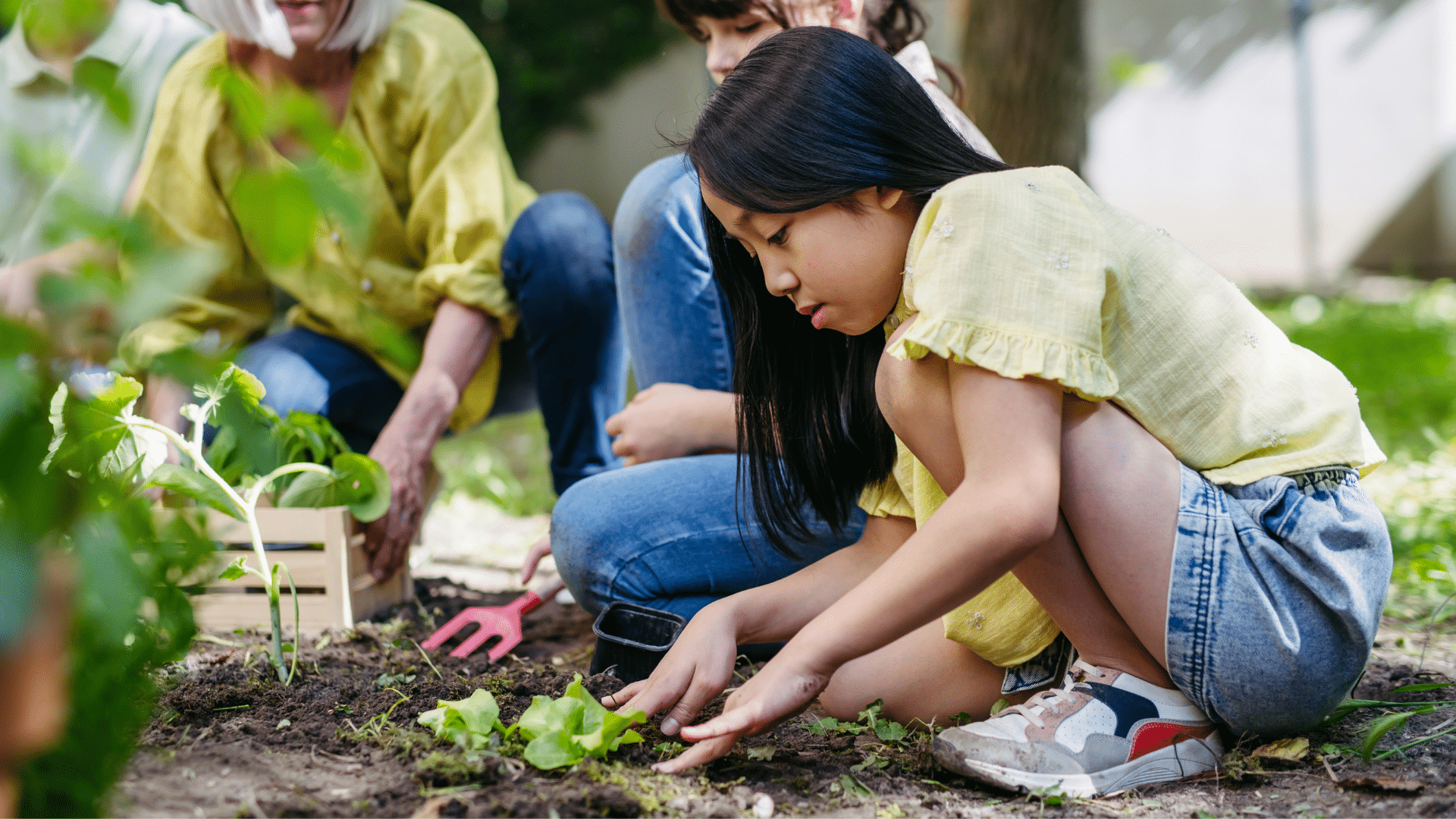
In the run up to our Faith & Science Symposium, we’ve been exploring the three components of Christian Deeper Learning: People of God’s story doing real work that forms self and shapes the world. In last month’s blog, we considered what it looks like to teach science in a way that helps students see themselves as “people of God’s story.” This month, we’re examining what “real work” looks like in the science classroom.
Transforming Scientific Imagination
Science, perhaps more than any other discipline, can easily be reduced to a dry collection of data and information. Yet, its power lies in something far greater: its ability to transform our imagination:
- Who could have imagined that life could thrive in the deepest corners of the ocean where the Sun’s light never penetrates?
- Or that we could capture the energy of footfalls to generate electricity?
- Or that hidden within our genetic code is an editing tool that can correct otherwise fatal genetic mutations?
Science opens our eyes to the beauty, creativity, and diversity of God’s creation, drawing us into worship. It also provides new avenues through which we can embody God’s love and healing in the world.
As N.T. Wright reminds us in Surprised by Hope:
What you do with your body in the present matters because God has a great future in store for it…What you do in the present—by painting, preaching, singing, sewing, praying, teaching, building hospitals, digging wells, campaigning for justice, writing poems, caring for the needy, loving your neighbor as yourself—will last into God’s future. These activities are not simply ways of making the present life a little less beastly, a little more bearable, … They are part of what we may call building for God’s kingdom. (p. 193)
What could be more “real work” than using the scientific enterprise to reflect God’s glory and build his kingdom on Earth? This is a calling that goes far beyond the classroom.
Another helpful way to think about real scientific work is to recognize that it involves the head, hands, and heart. In the Christian science classroom, we should intentionally address all three components.
The Head: Knowledge and Understanding
First, students must build a strong foundation of scientific knowledge. This is the “head” component, which involves learning the core content: models, theories, relationships, and data. Think of it as the raw material—the bricks, mortar, and blueprints needed to construct something meaningful. Without this foundational knowledge, a student can’t move forward. For example, a student interested in plant biology needs to first understand concepts like photosynthesis, cellular respiration, and plant structures like the xylem and phloem. They learn the “what” and the “why” of plant life before they can apply that knowledge.
The Hands: Practical Skills and Application
Next, students need practical skills to put their knowledge into action. This is the “hands” component, which involves the ability to actually do science. It’s not enough to simply know about photosynthesis; a student must be able to design an experiment to test how different light sources affect plant growth, collect accurate data, and make careful observations. This is the difficult, hands-on work of science—the craftsmanship required to build with the materials from the “head.” A concrete example would be students building and maintaining a school garden. They use their knowledge of plant biology to prepare the soil, select appropriate seeds, and care for the growing plants, demonstrating their practical skills.
The Heart: Purpose and Kingdom-Building
Finally, for Christians, science education must include a third, crucial component: the “heart.” This is where we provide the love, wisdom, and purpose to guide the knowledge and skills toward God’s ultimate goals. The tools of science are neutral, but their application is not. Science can be used to invent new weapons or to create life-saving medicines. A distinctly Christian science education gives students a framework for how to apply their knowledge (head) and skills (hands) to the ends of glorifying God and building his kingdom.
Using the school garden example, the “heart” component would be using the vegetables grown not just for a science project but to supplement the school lunch program or donate to a local food pantry. This transforms the garden from a simple experiment into an act of worship and service, embodying God’s love and providing nourishment for others. The students learn that their work—from understanding the science of plant growth to the physical labor of tending the garden—can be an offering to God and a tangible way to serve their community.
Conclusion
The goal of Christian science education isn’t the saturation of our intellect but the transformation of our imagination. Transformed imagination sees science as a mechanism to reflect God’s glory and to build for God’s kingdom—this is the real work of science. To do such real scientific work, we need to train students’ heads, hands, and hearts.
How exactly can you do that in your classroom? Come to the Faith & Science Symposium and find out!